Professional. That’s the proper definition to the generation of fighters that shone in the nineteen-nineties, which saw the creation of the Brazilian Jiu-Jitsu Confederation (in Portuguese, CBJJ, whose championships and titles revealed talents like never before) as well as the Ultimate Fighting Championship (UFC, which made the number of athletes grow tremendously throughout the world). A time in which, to many, Jiu-Jitsu became more profitable than law, economics, engineering or aviation.
While in the 80’s few athletes made a career in the black belt, and the groups of the higher rated were empty – the following decade established a transition towards an era of many stars, in which a gold medal in a big tournament meant a fighting marathon.
With such myriad stars to choose from, we picked out 25 jurors who followed closely the whole decade, and asked from each of them a top-five list. A complicated request indeed. To Castello Branco, this list is worse than the one elaborated by Pele for Fifa. To doctor/black-belt Joao Paulo Salgado –or “Big Head� if you will– it would be fair to ask for 50 names. To another athlete, Roberto “Risada,� the best would be to row the athletes by weight categories. To Wallid Ismail, performance at the open is no good to judge anyone. And so on…
 In the end, almost everyone voted and contributed to our documentation of the period. Unfortunately, we didn’t have Master Carlson Gracie’s list. “First of all, I’m not talking about any traitor,� he shouted on the telephone from his Chicago home, still holding the grudge with the pupils who abandoned his academy. And he went on: “Second, you can’t tell whether Nino is better than Royler, or Amaury better than Fabio, or if Saulo is better than Roleta. These six are the best, but I can’t put them in order nor take any of them off. I’m out.�
Looking for perfection
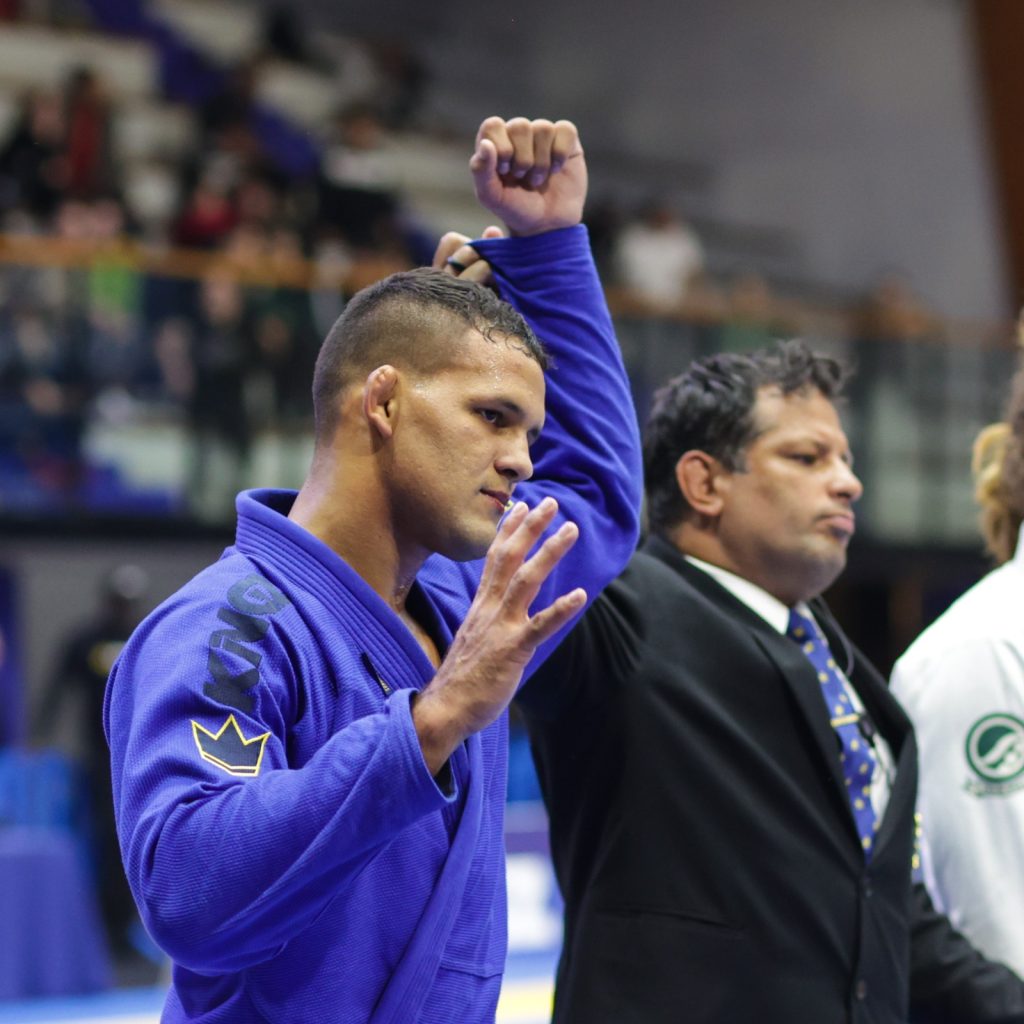
1st Royler Gracie
70 points (18 votes: 8 as 1st, 4 as 2nd, 3 as 3rd, 2 as 4th, 1 as 5th)

The space around the gym in the Akxe academy at Barra da Tijuca, RJ, is not big enough. Thousands of spectators struggle to watch an even tighter battle, taking place on the mats assembled on the court. Helio “Soneca� (‘Snooze’) gets to Royler Gracie’s back. Has he got an advantage? The following seconds prove it isn’t. With a hook wrapped around the adversary’s legs, Royler takes a somersault with his head on the floor and ends up on top, consolidating an inversion never before seen in a Jiu-Jitsu competition.
Over ten years have elapsed since that Sunday in November 1994. But to this day the moment is remembered. “People come to my home to ask if I have that move on tape,� says Osvaldo Paqueta, one of the main research sources of the sport, since he owns a video archive of hundreds of fights. The event was the Brazilian Jiu-Jitsu Championship, the first one organized by the new-bourn CBJJ, which would spend the next five years promoting an average six tournaments per season.
Royler Gracie, who entered the nineties as an experienced black-belt competitor (deemed by some the best fighter of the 80’s), would use this competitive environment to test his strength against several rising stars and become a hangman to most of them.
Alexandre Soca, Helio Soneca, Vinicius Draculino. Then, Marcos Parrumpinha, Vitor Shaolin, Leonardo Vieira and Leonardo Santos. Royler defeat each of these fighters – great athletes in his category– once or twice, and many other fighters, during his reign, which lasted the whole decade (he lost only once outside the opens, in 1995, to cearense Marco Aurelio – nowadays an ATT fighter whom Gracie would beat thrice later on). In the 1999 Worlds, his last official appearance wearing the gi, he defeated two Leonardos (Vieira and Santos) and earned his fourth title.
Soneca, defeated for the second time in the ’99 Worlds, compliments: “He kept himself on the top for five generations.� The secret? Gathering technique, strategy, discipline, and good physical and mental preparation. Leonardo Castello Branco summarizes: “I could make up many lists with different names, under different criteria, like the top technicians, submitters, or the most competitive. On every single one Royler would be first.�
Â
Untamable genius
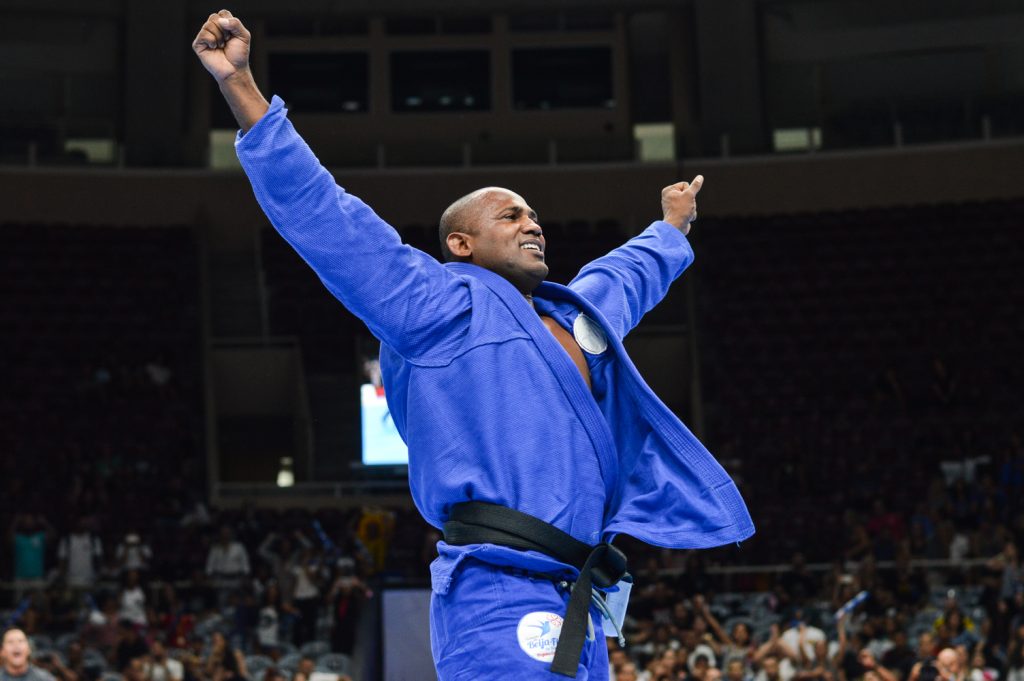
2nd Nino Schembri
38 points (14 votes: 7 as 2nd, 1 as 3rd, 1 as 4th, 5 as 5th)

The purple-belt open’s final of the Novo Leblon Cup is being held at an homonymous condo in Barra da Tijuca. There’s great shouting going on. Sergio Ferrari, pupil to Sergio Bolao, is on top; the score is nil for both sides and, few seconds from the end, he is probably going to win by decision. But wait. Before the whistle, Nino sweeps, mounts and grabs his arm, changing the whole situation. The following day, filling the form as Antonio Schembri, Nino gets to a hospital at Rio’s West Zone. Even with a bad hepatitis, he had performed that amazing show.
“El Niño� reappeared with a gi on in November that same year, winning the South Atlantic Cup, now wearing the brown belt. He would still conquer the following year’s open at the Brazilian Championship before getting the black belt. Then came the disease that took him off the first world championship.
 Thus the pattern of Nino’s career. After each great exhibition, the shipyard. Hepatitis, knee contusions, ankle fracture, rupture of the shoulder’s ligaments were intercalated with the Brazilian Open Title in 1996, the 1998 Worlds’ spectacle, the 1999 Pan-American swept away by the “Twister.� On each presentation, he took something new out of his sleeve and made the audience roar with his fluidity and use of tremendous elasticity. “I’ve seen him beat monstrous guys. But he can also lose to someone worse than him,� analyses Pedro Duarte, one of the 14 jurors, from several academies, who included Nino among the best of the 90’s – a paradoxal constancy considering the ups and downs in the fighter’s career. And it becomes even more if we notice that “Elvis� was elected the decade’s #2 by seven voters.
 A few explanations: “He’s fantastic fighting, he goes out there to kill or get killed. One of the best in the history of the sport,� says Nova Uniao black-belt Leonardo Santos. “He never quits. Tries to get a grip the whole time,� analyzes Andre Pederneiras, professor at Leo’s academy. “The most spectacular and aggressive Jiu-Jitsu I have ever seen,� assures American Top Team fighter Marcel Ferreira. The fantastic stretching before the fights that made every photographer happy was just a detail.
Showman
3rd Leo Vieira
36 points (12 votes: 3 as 1st, 1 as 2nd, 2 as 3rd, 5 as 4th, 1 as 5th)

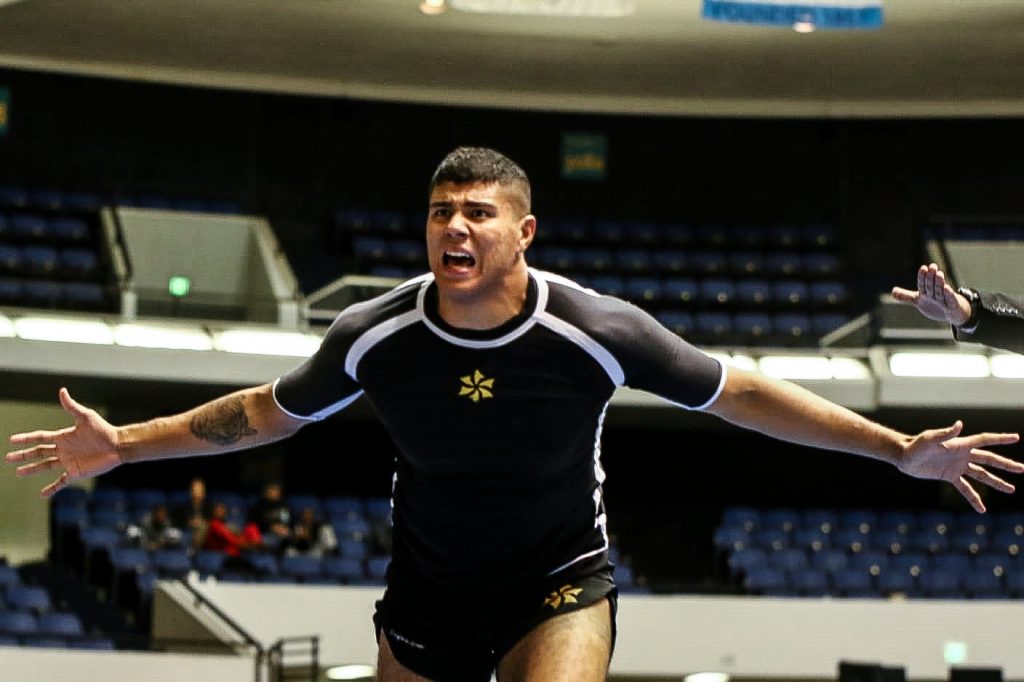
Why is Leonardo Vieira, whose best results begin in 2000, rated third in the 1990’s?
Simple: winning or losing, his fights always caught the public’s attention. In the 1996 Worlds, still a brown-belt, Tijuca Tennis Club was even hotter in that summer afternoon in which the feather-weight final, won by Leo over Mauricio Mariano, raised the stadyum’s temperature.
In 1997, as a black-belt, he would again have the supporters on his side in his loss to Marcio Feitosa in the light-weight. And in the following year, when he got the rematch against Marcio, it seemed the Tijuca was reproducing the past manifestations, for the scene would be repeated. As it was again in 1999, when Leo lost to Royler.
At the end of the nineties, a power-trio dominated the light-weight: Marcio Feitosa, Vitor Shaolin and Leonardo Vieira. Together they won most of the championships.
In the choice of the best ones, Leo outstood in relation to the other two (Shaolin placed 8th and Marcio 10th). Not for the amount of titles nor the wins on direct confrontation. The jury chose Romero Cavalcanti’s disciple for his style. “The ablest athlete nowadays,� said Roberto Risada. “Pretty and efficient Jiu-Jitsu at once,� Marcel Ferreira agrees. “Scary quickness of reasoning, you never know what he’s about to do,� declares Pedro Duarte. We sum up with the title: showman.
Â
A general in times of peace
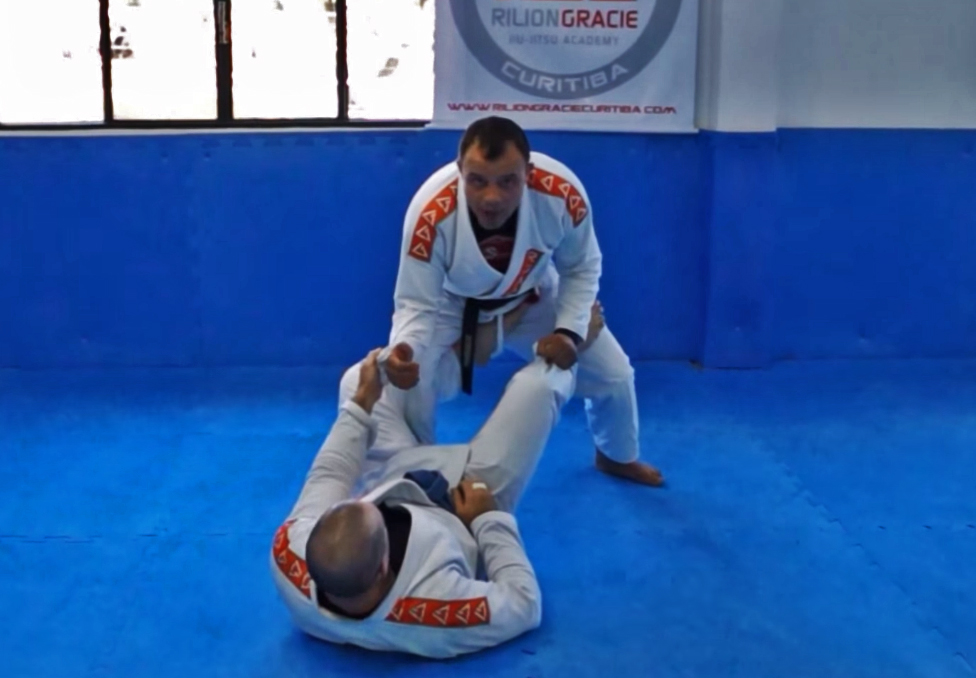
4th Fabio Gurgel
33 points (9 votes: 4 as 1st, 1 as 2nd, 2 as 3rd, 1 as 4th, 1 as 5th)

Up until 1999 there hadn’t happened the earthquake at Alliance that left on one tectonic plate Leonardo Vieira, Rodrigo Comprido and Eduardo Jamelao, among others, and, on the other, Alexandre Paiva, Fernando Gurgel, Leonardo Leite and gang; Master Romero Jacare had a foot on each side. In the 90’s, all in the team agreed on Fabio Gurgel’s nickname (general), by the way he led them.
In such outfit, Fabio was consecrated as one of the main names in Jiu-Jitsu. Deemed technical in a time where there was a myth that this quality belonged exclusively to light fighters, Gurgel fought with constancy throughout the decade – the victories over Murilo Bustamante (1996), Sergio Bolao (1994), Roleta (1995) and Ricardo Liborio (1999) making a clear statement.
“A great technician, he was unlucky against Amaury,� comments Big Head, recollecting the fact that Bitetti took him off the way to the open’s title in the 1996 and 1997 Worlds. Even so, in this election, Fabio got more points than Bitetti, maybe for having polarized the votes of those closest to him, while his hangman divided the choice of those who watched him train against fifth place Murilo Bustamante.
Royler succeeds Rickson and is the best of the 90's - Part II