
Daniel Mérola Ignacio, 25, grew up on a mat. Son of black belt and famous referee Sérgio Ignacio, he was raised in the traditions of the Gracie family, and was accompanied from his earliest training by his godfather, Renzo Gracie.
It was Master Renzo who guided him throughout his entire training — from the loose kimono he wore as a child to the black belt he earned with merit and honor.
More than a disciplined and technical athlete, Daniel found his true calling in teaching. From a young age, he began leading classes and seminars, with emphasis on his work with women and children, where he combines sensitivity, clarity and confidence. He believes that Jiu-Jitsu can be a powerful tool for personal transformation — today, his greatest goal is to make this transformation accessible to everyone.
In addition to teaching at gyms for a variety of audiences, Daniel has a unique role in the area of training focused on security and self-defense. He studied Business Administration, balancing his studies with training, classes and seminars, and is now a partner in one of the most respected security training companies in Brazil.
On a daily basis, he instructs private and public security professionals, helping them with the technical, physical and emotional development necessary for their roles. He is also a guest instructor at institutions such as the Special Resources Coordination of the Civil Police (Core), the Army Paratroopers group and Acadepol, the training academy of the Civil Police of the State of Rio de Janeiro.
In one of the most complex urban contexts in Latin America, his contribution is recognized by colleagues and authorities as a rare differential for someone his age.
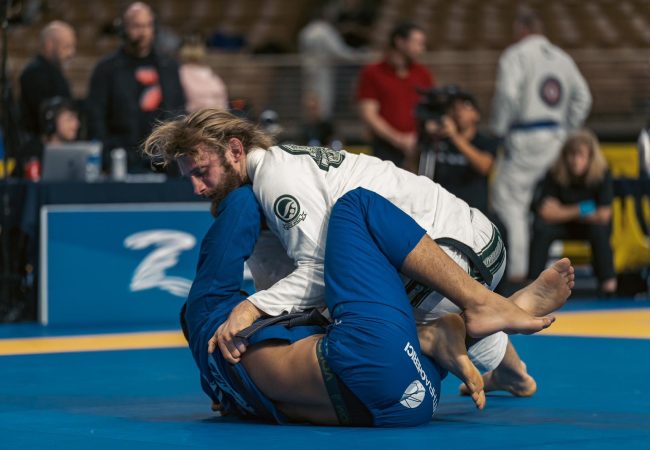
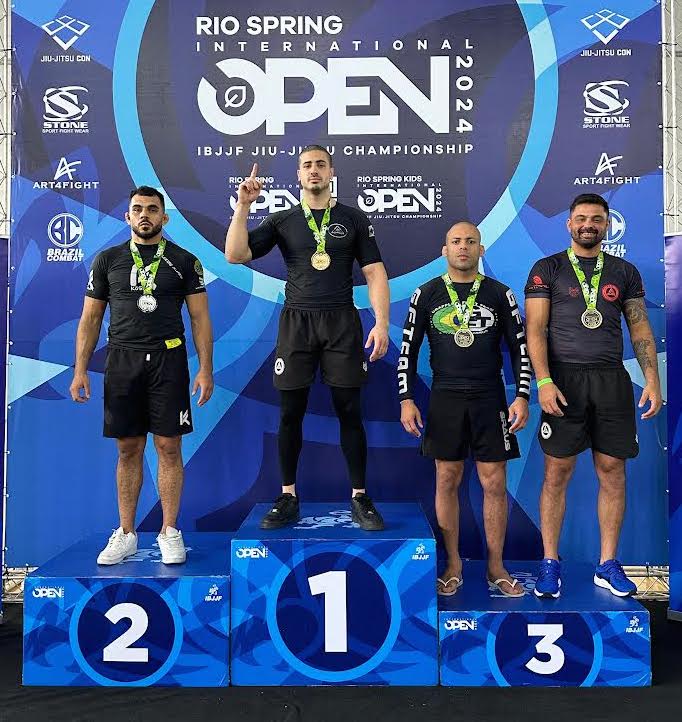
Daniel’s trajectory in competitive Jiu-Jitsu is marked by significant achievements that demonstrate his excellence. In 2022, he was the Brazilian No-Gi vice-champion by the IBJJF. The following year, he won the gold medal in the black belt heavyweight division at an international CBJJO event. Also in 2023, he was champion of the “King of Rio”, a tournament promoted by FJJ-Rio, the first Jiu-Jitsu federation in the world. In 2024, he won the Rio International Open No-Gi championship in the black belt super heavyweight division, promoted by IBJJF.
These achievements are always combined with hard work inside and outside his company. But, according to him, these are just a few steps on his path. The next steps? Taking his knowledge to new frontiers — inside and outside Brazil.
GRACIEMAG: Do you still remember how you took your first steps in the kimono?
DANIEL IGNACIO: I can barely remember my first day on the mat; it’s as if I had always been there. I feel that Jiu-Jitsu has been present in my life since day one, because I was blessed to have a father who always put the ideals of Jiu-Jitsu as a model of education to guide me inside and outside the academy. My early contact with Jiu-Jitsu is due to my father, Sérgio Ignacio, and my godfather, Renzo Gracie. When I was around 3 years old, I started judo, and soon after I moved on to Jiu-Jitsu — and then also to wrestling. Wrestling is so popular in the United States, and I lived there during my childhood, so it is also a fight that is part of my trajectory.
How did that passion for Jiu-Jitsu prevail?
I always knew that Jiu-Jitsu was my greatest passion. I grew up on the mat and in a family-run security training company, where we used Jiu-Jitsu to teach self-defense. In addition to having the encouragement and inspiration of my father and godfather, I was lucky enough to have a mother who always went out of her way to take me to and be present at all training sessions, fights and competitions from a very young age. Without her dedication and love, it would have been impossible.
How did you feel when you became a black belt?
My journey to black belt was long. From white belt to black belt, it took over 16 years of walking. The evaluations for changing belts always followed a rigorous process: the first step was to be actively training Jiu-Jitsu; then, I had to know all the techniques corresponding to my belt at the time, as described in the book by Renzo and Royler Gracie – a book where the techniques are separated by belt. I also studied the contents of the book by the great master Helio Gracie on Jiu-Jitsu and self-defense. With this knowledge consolidated and having already completed the appropriate time, I went through a technical and performance evaluation in which I had to defeat more senior and bigger opponents to earn the next belt. Since my father and godfather Renzo always encouraged me to participate in the best seminars and train with some of the best in the world, my evolution never stopped.
And how was your phase as a brown belt, about to receive the black belt?
At that stage, I chose to compete in the CBJJ Brazilian Championship while still a brown belt, to end that stage in the best possible way. I ended up winning silver medal and the title of Brazilian vice-champion. After that, I traveled to the Renzo Gracie academy in New York, where I spent a month training intensely. I owe much of who I am and what I believe in to my father and Renzo. I couldn’t be more grateful for, as we say, having learned straight from the source. I was extremely privileged to have access to so many influential names in the Gracie lineage from an early age, and I made sure to take advantage of every opportunity that was given to me. After that month, I finally “graduated” as a black belt. It was a remarkable day, full of emotion, in which I realized how worthwhile each stage of the journey was. It is not an easy path, much less a quick one; it teaches the value of perseverance and patience. There is no shortcut to becoming a black belt, the only way is to never give up.
And what about your work focused on public and private security?
Our company has been in business for over 35 years. This legacy has been passed down from my grandfather to my father, and from my father to me. The company’s motto is something I will carry with me for the rest of my life and intend to pass on to my future children: “Fight and win!” It’s a short phrase but full of meaning. Giving up is not an option. In addition to the technical knowledge of self-defense and Jiu-Jitsu, we try to convey this message every day: the path is tough, but through struggle comes triumph — and it’s this belief that drives us forwards. Today, I have been practicing Jiu-Jitsu for almost 20 years, which seems like a lifetime. However, I know that this journey is just beginning.
What have you learned as a competitor?
In the championships, I learned a lot about self-control and how to deal with my emotions — whether they were good or frustrating. I learned how my mind and thoughts control my body and the decisions I need to make in milliseconds. Therefore, it doesn’t matter if there were hundreds of hours of training, weight training and good nutrition — your mind needs to be focused, calm and positive, or it’s over. Jiu-Jitsu teaches us to respect our opponents before anything else, because arrogance is the fastest way to defeat — and the truth is that we can learn from everyone. It doesn’t matter the color of the belt, the age or the weight: everyone can have something to teach us. It’s amazing how much I learn teaching young children — whether about Jiu-Jitsu or about the worldview.
What is your approach when teaching Jiu-Jitsu to children?
I love teaching children, they have a lightness, purity, and a special outlook on life. I try to bring a little of their positivity into my personal life. At this stage of life, they are like sponges and absorb everything we go through, so we need to be careful about what we say and how we can help build their self-esteem and self-confidence. The approach with little boys and girls has to be subtle. Jiu-Jitsu is introduced in a light and fun way. It can’t be a boring class with extremely technical movements. It is a balance between technique and leisure time. Therefore, children’s training must be fun, but disciplined. We want children to have fun, but we also want them to learn respect, discipline, and self-defense. Understanding that Jiu-Jitsu is a form of defense and not attack is essential.
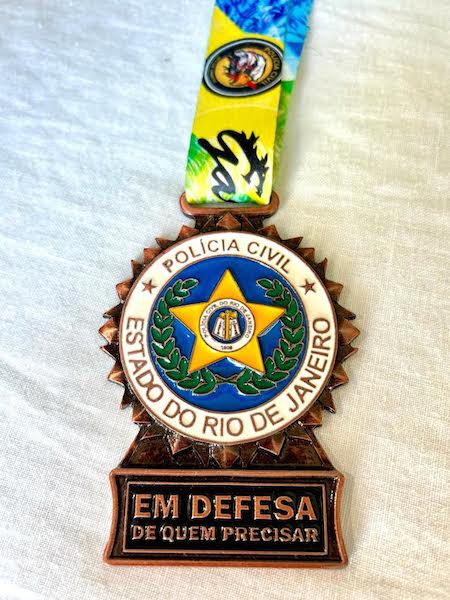
Medal received for contribution to police education, in Rio de Janeiro.
What is the main goal of teachers who deal with such young students?
Our team always seeks to teach the importance of boys and girls being self-confident and, at the same time, humble. We teach them to keep their distance from problems and to deal with them with determination and with their heads held high. Many children are there because they want to learn or because they have suffered some kind of trauma. At this age, Jiu-Jitsu is important to create a secure, fearless, confident child with good self-esteem, in control, prepared and respectful. Jiu-Jitsu, therefore, is essential to prevent bullying, both to prevent it from happening and to prevent the child from being a target of it. We work on this a lot with the children, teaching them all the necessary techniques so that they are able to defend themselves.
Where did you learn to teach kids?
To convey all of this in a light and pleasant way, we use several different techniques and methods. I acquired much of this knowledge in a special course for BJJ instructors taught by Master Leão Teixeira, a national reference in teaching Jiu-Jitsu to children. It was in this course that I had the opportunity to teach and increase my experience with them. Today, I already meet teenage students who I taught a few years ago, when they were children, and they are very grateful for how I was able to participate in their personal development. I can’t wait to see, in a few years, that my work has led to the development of better adults, with character and confidence.
What was the greatest lesson in overcoming adversity that you learned in Jiu-Jitsu?
There was a tournament I competed in where I had been sleeping very badly for days, in the hospital, with my wife admitted. Then, I tore an ankle ligament in the first few minutes of the fight. My body was exhausted, my mind was very worried about her health, and I had not trained for weeks due to various personal issues. Furthermore, fighting with a torn ligament is excruciatingly painful. Even so, I did not give up and ended up submitting my opponent, taking the gold medal to the hospital. These moments show you that the Jiu-Jitsu we learned from the Gracie family goes far beyond fighting — it is a life lesson. Because, in life, we will almost never have the ideal conditions to achieve anything. We have to work with what we have, do our best and believe that it will be enough. This tenacity and determination are what change someone’s life — it is what defines the type of life they will have.
Have you seen Jiu-Jitsu change the lives of young people with problems?
I have students who have truly changed their lives thanks to training. They left behind drugs, excessive drinking, and harmful influences that were holding them back. They started to believe in their own potential, to make better choices, to have discipline and routine — and this took them to places they never imagined they could reach. These life changes that I witness every day, through Jiu-Jitsu, are certainly what impacts and motivates me on this path.
When did you discover your calling to teach?
Since I was 12 years old, when I would go to the training company where I work today to accompany my father to his classes. That’s how my grandfather taught him, and he taught me. My father is a natural teacher, and I was always amazed to see how easy it seemed for him to speak to so many people and to build a clear line of reasoning, so that everyone could follow and assimilate. Like my father, I believe that I have always had a calling to teach and help; I have always had the patience and clarity to guide my students’ progress. But what I have learned over time is that when we master a subject, have the humility to learn even more about it, and teach with love and attention, we can become good teachers. After a few years of being forged within the company as an assistant, I started teaching officially in 2019, when I already felt more ready and prepared. Since then, I have done everything to be the best teacher possible.
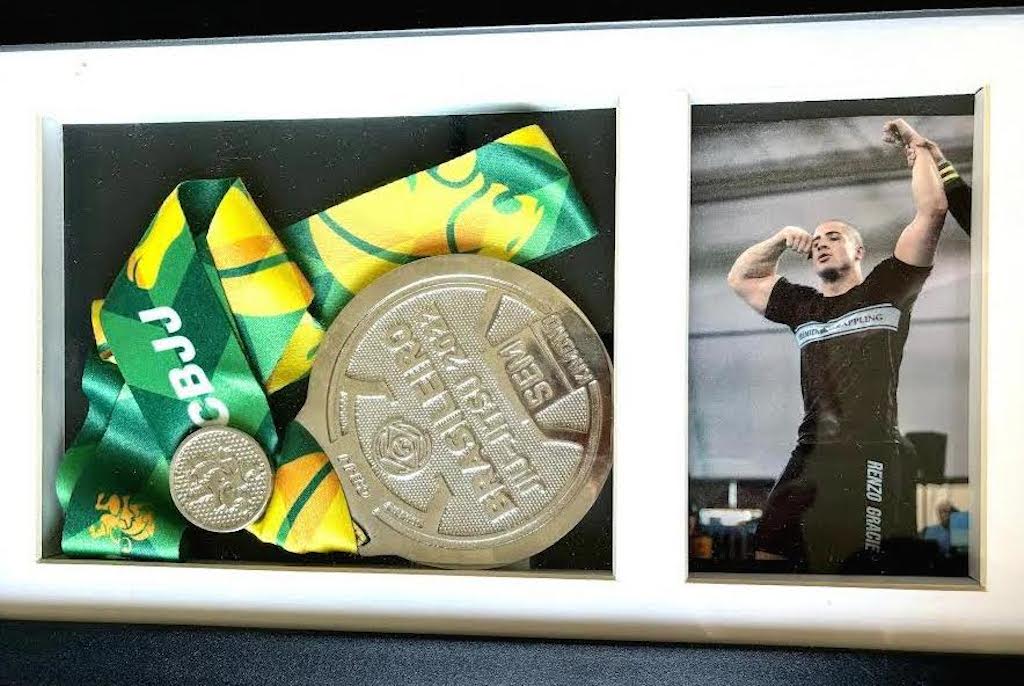
Daniel Ignacio and his special silver medal at Brasileiro da CBJJ. Photos: GRACIEMAG
What does it take to be an effective BJJ instructor?
I believe that teaching is closely linked to empathy: knowing how to put yourself in someone else’s shoes and understand how they will receive the message you want to convey. Each student has a different story, cultural, family and personal context. Teaching requires connecting with students and understanding their needs in order to understand the best way to deliver the message. The language, the level of difficulty, the demands, and many other aspects of teaching adapt according to the type of student on the other side. Understanding this was essential to give a good class and be understood. Classes for laypeople, for police professionals, for children, men or women: all have their own specificities and deserve specific care.
What are your self-defense classes for women like?
Unfortunately, we live in a sexist world, where women always have to fight harder to feel heard, respected and, most importantly, safe. Jiu-Jitsu, for almost a hundred years, has always proven to be an excellent tool for giving women some of the self-confidence and security that society takes away every day. It is something I recommend to all women I know, of all ages. Knowing how to defend yourself is essential for all of us, but especially for women, who are often targets of barbaric crimes, both inside and outside the home. For my specialization, I went to the reference for women’s Jiu-Jitsu, the Gracie Kore school of champion Kyra Gracie, a renowned black belt with books on the subject. Kyra has made it her main mission to bring Jiu-Jitsu knowledge to women in a way that they feel quite comfortable and safe absorbing it. I took a professional course in teaching Jiu-Jitsu to women, using the Gracie Kore methodology, where I learned a lot about how to conduct classes in a way that makes women feel valued, respected and confident. I learned there how to create a comfortable and inclusive environment for everyone on the mat.
Have you ever taught female police officers? What is that experience like?
Yes, I had the opportunity to teach Jiu-Jitsu techniques applied to women’s self-defense at the Civil Police Sports Center in Rio de Janeiro. In this class, we had female police officers and also the “Empoderadas” group, a sensational group that fights violence against women, very inspiring and necessary. It was a great experience, where I was able to teach strong women how to have more ways to defend themselves. I intend to continue learning a lot in this area, since I really want to help women in the best way possible. As a man, I understand that there are nuances in women’s lives that I don’t experience firsthand, so it’s important to listen in order to understand.
How important is Jiu-Jitsu for the security forces, in Rio or in the world?
Training agents goes far beyond simply being technically ready for a conflict. Thanks to Jiu-Jitsu, agents are shaped with self-control and self-confidence, capable of dealing with real situations calmly, clearly and ethically. My greatest responsibility is to make these professionals better trained, so that they can protect themselves and the population. This training is both technical and mental. A good security professional, trained in Jiu-Jitsu, can transform a potentially lethal situation into a non-lethal one, saving and sparing the lives of others. A police officer trained in Jiu-Jitsu, in many situations, does not need to use a firearm to defend himself, which offers security that goes beyond carrying a weapon. Thus, Jiu-Jitsu can be used to prevent the escalation of conflicts, where, through technical control, we can protect both the security agent and the citizen. All of our training is adapted to the realistic environment of the public or private security forces for which we are offering this training.
How does your knowledge of real-life situations help your results as a fighter in sports Jiu-Jitsu?
I like to fight forward, always looking to takedown and submit. My preparation routine involves always training and being active, whether it’s with heavy training, drills, weight training or teaching classes. A good fighter must always be ready and prepared. Ever since I got my brown belt, I’ve been focusing on Jiu-Jitsu without a Gi, or “No-Gi” abroad. I saw a greater similarity there with our daily lives and with self-defense, since we don’t have the Gi to hold on to and control is much more difficult. I believe that every Jiu-Jitsu practitioner should test themselves in an official competition at least once. We discover a lot about ourselves when we’re on the mat, in the middle of an arena full of opponents. We learn to deal with pressure in a different way. Our mindset should be to always want to evolve and learn, to always be prepared for combat, and to know how to deal with victory as well as defeat. The main thing is to feel trained and always learning. This gives you a sense of accomplishment before the fight begins, and this feeling is more than essential to winning. Without it, you are already defeated.
What are your goals today as a teacher?
When we breathe Jiu-Jitsu, we learn that our discipline is not just a sport; it is a lifestyle. Today, I don’t think about training athletes to win championships. I want to build strong and confident people who, through Jiu-Jitsu, achieve a better life and become better people. I want to combine my academic background in Business Administration from IBMEC, my command of the English language and my knowledge of self-defense to work globally. I want to develop educational programs, help expand Jiu-Jitsu around the world and train students with the principles and values I believe in. And, with all this, I want to continue to be active in high-level competitions, because I learn and evolve a lot in each one. I hope to be able to inspire others, just as many veterans have inspired me to be who I am. Thank you very much to everyone for the opportunity.
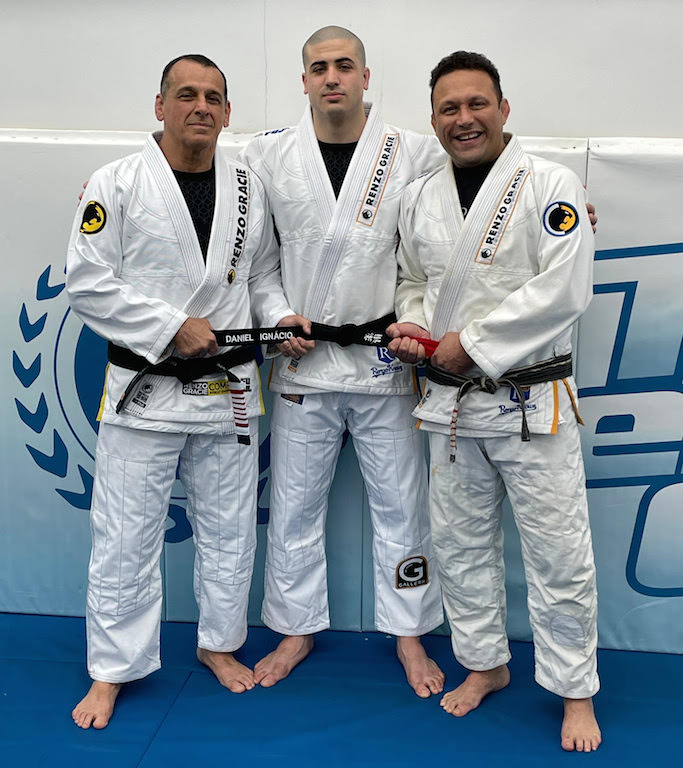
Daniel among his father and his godfather Renzo, at Renzo Gracie Academy in New York. Photos: Personal Archives