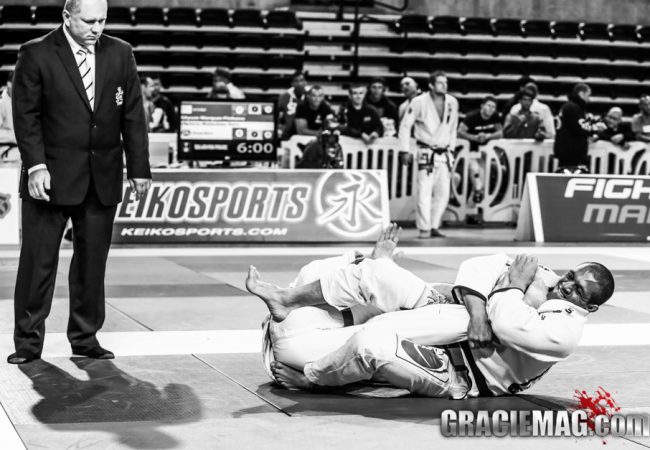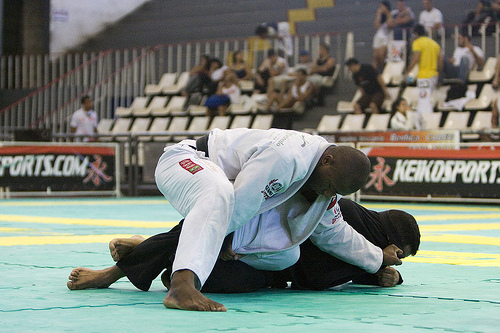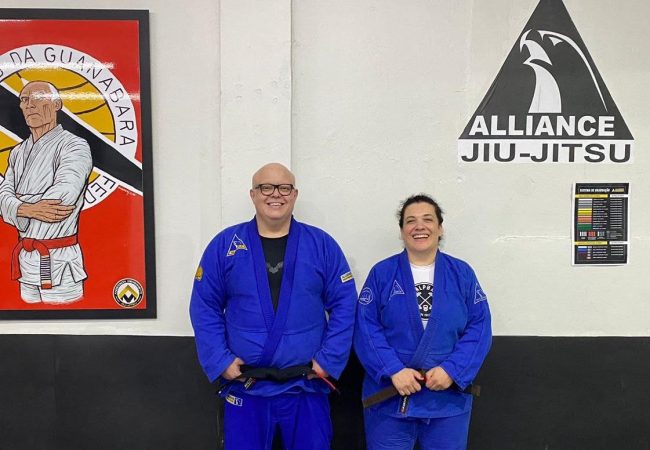

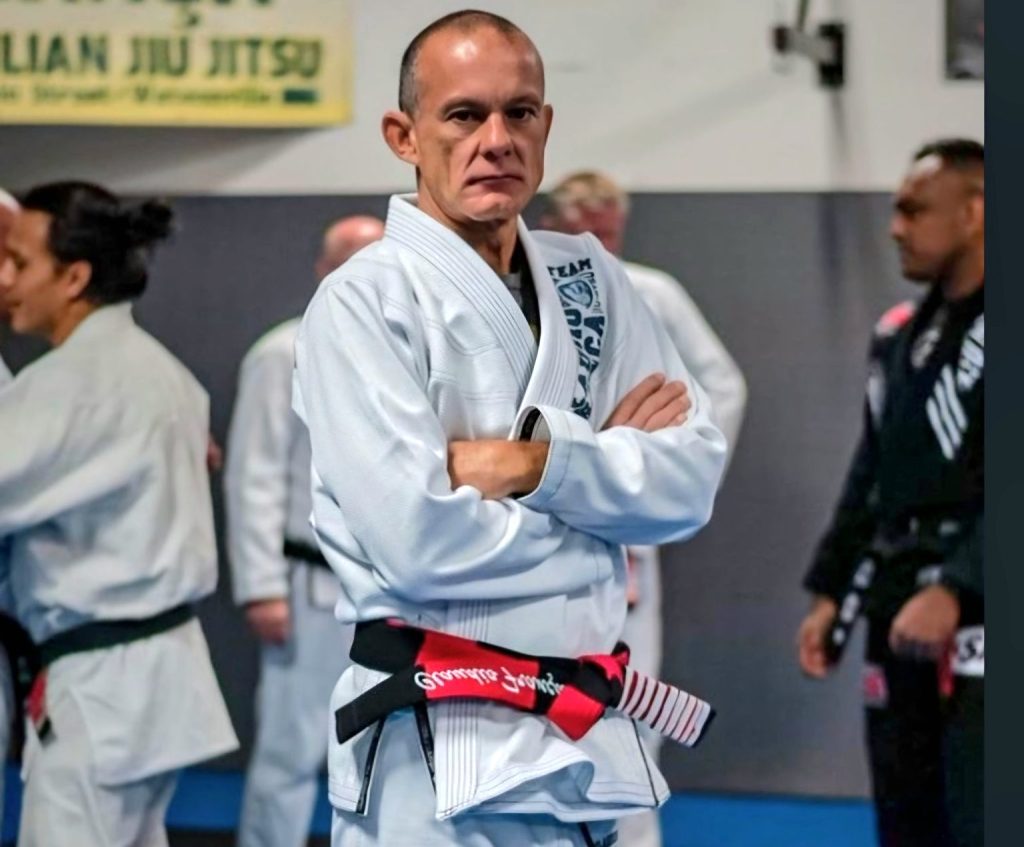
On the weekend of November 15th and 16th, William Overfelt High School in San Jose, California, prepares to welcome a diverse group of dedicated masters and students. The American school will host the US Open, which began in 1995 and this year marks its 30th edition.
Brazilian Jiu-Jitsu coral belt and founder of the event, Claudio França, spoke with GRACIEMAG about the tournament’s results so far and what he hopes for the future of the sport.
US Open 30 expects between 1,500 and 2,000 competitors across all divisions, both gi and no-gi.
Check out all the tournament details at: https://bjjtour.com/tournaments/u-s-open/
GRACIEMAG: When an event turns 30, it’s the perfect time to celebrate and also to take stock of all its achievements. On this anniversary, what wish do you have for the US Open? What remains to be achieved?
CLAUDIO FRANÇA: I wish for a little more visibility outside of Jiu-Jitsu circles, so that the tournament could provide even more returns for everyone who participates, from athletes to sponsors. Martial arts-focused media contribute, but the coverage for championships and Jiu-Jitsu stars on major conventional channels is still scarce, almost non-existent. The struggle in the coming decades will be to see our Jiu-Jitsu competitions live on channels like ESPN, Fox Sports, and other major broadcasters. This would be a decisive step toward attracting strong partnerships and sponsors, and being able to distribute well-deserved and substantial prizes to black belt competitors.
In 1995, you organized the first championship in California, in Santa Cruz, and it must have been difficult. What else seems to have changed in the championship environment since then?
When I organized the first US Open, I had been in the US for less than two years. Setting up Jiu-Jitsu mats was already difficult, let alone negotiating partnerships and purchasing basic equipment for a championship. What I remember today is how coaches and team leaders were much more nervous around referees.
How did the US Open help strengthen Jiu-Jitsu in Northern California and the country in general?
I believe the key role of the first editions of the US Open was to show students and the community the essential differences between sport Jiu-Jitsu and MMA, a sport that was becoming very popular in the United States with the UFC. Young people realized they could train Jiu-Jitsu for a thousand reasons, not just to step into the Octagon and fight bare-knuckle. And so, prejudices began to fall away, and the lives of many families were touched. It was a time when championships were only held in Brazil, and from the beginning, we were able to attract fighters from many countries and help strengthen and promote our martial art in the United States. So, we played a very strong educational role.
When you decided to organize your first tournaments in Rio, championships were extremely rare. A losing fighter had to wait a year for a rematch. Today, there are events every weekend, in dozens of cities around the world. Is there any downside to having so many competitions?
The sport gains popularity with each championship; that’s a huge benefit. The downside is when the championship doesn’t take care of the refereeing or the safety of the athletes, and this can give the wrong impression to the participants. What I also don’t like is when each event feels entitled to change the rules and points of Jiu-Jitsu. The sport has well-known rules. You must follow the regulations governed and consolidated by our International Federation. This confuses the minds of athletes and fans, and hinders the growth of the sport in mainstream media. Imagine if in tennis, each tournament had different scoring? It would be confusing. This is very detrimental to the future of the sport.
Do you still enjoy traveling to other championships to see how they’re organized?
Today I’m a coral belt, but since my youth, I’ve always fought and competed in many championships. That’s always been my greatest pleasure. Later, I began to enjoy taking my students and promoting Jiu-Jitsu in Brazil, the US, or wherever. That’s what brought me here. It’s always a pleasure to support and learn from other organizers.
Your events have hosted fights by several American stars, emerging young talents like Kron Gracie and even businessman Mark Zuckerberg. Have you ever learned a technique in a fight at the US Open?
When we wear the organizer’s hat, it’s rare to pay full attention to the fights, to the point of noticing the technical details. But I’ve always, always learned a lot right there in the best spot in the arena, right there in the center of the fighting areas, or as an instructor on the edge of the mats. Weeks after my events, I end up analyzing the game and style of the greats.
What was Claudio França like as a student, small and young, there on the mats of the great master Francisco Mansor?
I started having fun, learning from an early age with other children, in Master Mansor’s little groups. When I became an athlete and teacher, I began to absorb a lot from the master, who is that great storyteller, a living page of Jiu-Jitsu. When he opened Kioto BJJ in New York, I made a point of going there to hear those delightful stories. We’d go out to dinner, and I learned a lot, about his past as a police officer and the classes he took with the great master Helio Gracie. Another lesser-known side of him is his religious side. He always helped me find that kind of peace as well. Today he lives in São Paulo; the affection and love remain the same, but I miss him deeply.
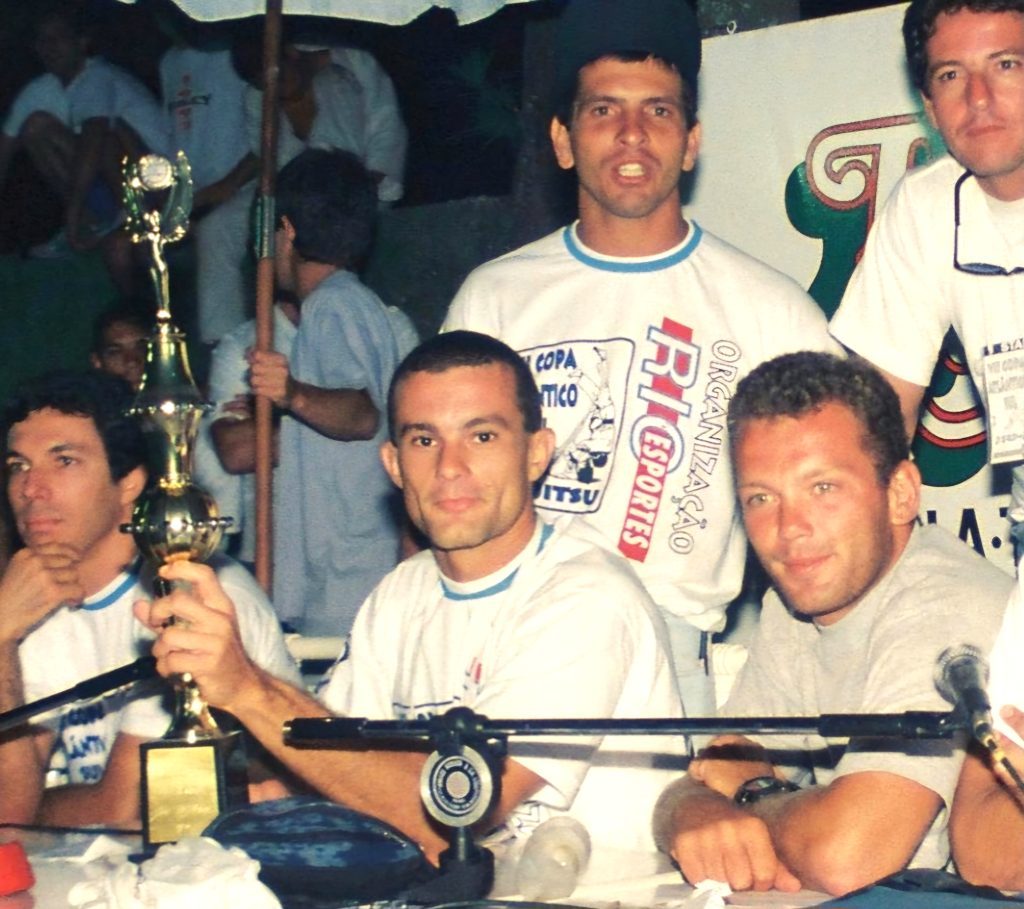
Old times: Claudio leading championships in Rio de Janeiro. Photos: GRACIEMAG