
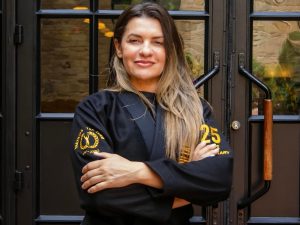
Born into extreme poverty in rural Brazil, Denise Gamonal left home at 15 with little more than the courage to rewrite her own destiny.
Through the highs and lows of starting over and building financial stability, she forged an unshakable mindset—one that draws a razor-sharp line between the possessions she owns and the human being she has become.
A successful entrepreneur in the veterinary health industry and co-founder of Brazilian Top Team Texas, Denise captures the essence behind the medals and milestones of great minds on her podcast, The Champions Code. From her own studio, she conducts exclusive interviews with the sensitivity of someone intent on decoding the vulnerabilities and fresh starts that shape true champions.
To her, the gentle art was never a magic formula, but rather the ultimate tool for mapping limits, navigating loss, and living up to the belt tied around her waist. This pragmatic yet deeply human outlook was honed alongside historic figures of the sport, notably her husband and partner on the journey, Diego Gamonal.
The dynamism she brings to the mats mirrors a multifaceted routine that defies the clock. Alongside overseeing global production for Runner’s Relief Therapy—a premier equine care line—Denise juggles motherhood to Bella and George, teaches Jiu-Jitsu, and still steps onto the competition mats. Attuned to the evolution of women’s Jiu-Jitsu, she stands as a voice of leadership and clarity for the generations to come. Read on!
GRACIEMAG: You had a difficult upbringing, yet today you are an accomplished woman, driven by immense personal growth and entrepreneurship…
DENISE GAMONAL: Yes, I was born in the countryside of Brazil, in a reality of extreme poverty. My childhood was marked by hardships that no child should ever have to face. I left home at 15 and had to learn how to survive at a very young age. I’ve been completely broke more than once. I’ve also experienced prosperity, only to have to start all over again. That shaped my relationship with material possessions: today, I value what I build, yet I never confuse what I own with who I am. My primary professional focus is entrepreneurship in the health and veterinary care sectors. I am an inventor and manufacturer of products, including Runner’s Relief Therapy, developed specifically for equine care. That work, through my company, is the centerpiece of my career. Alongside my husband, Diego Gamonal, we also built Brazilian Top Team Texas. Jiu-Jitsu wasn’t solely responsible for my transformation—that began long before I ever stepped onto a mat. However, the gentle art gave me a framework to confront challenges, recognize my limits, and keep learning even on the hardest days. Today, I consider myself fulfilled not because everything is figured out, but because I can look back at the girl who left home with virtually nothing and honor the distance she has traveled.
What were the greatest sacrifices you had to make to earn your black belt?
One of the biggest sacrifices was time—countless hours of training, preparation, competing, losing, and recovering, all while life outside the gym continued to demand my attention. At the same time, I don’t like to romanticize suffering. Not every sacrifice needs to be turned into a heroic tale. There were moments when I had to reshuffle my priorities and accept that evolving doesn’t mean winning every tournament or making every single training session. Today, after 12 years on the mats, I view that milestone differently. Getting promoted doesn’t end the learning process; it elevates your responsibility. The belt carries tremendous weight, and our actions must continuously live up to it.
Who were your biggest role models and mentors in the sport, and what is the main lesson you inherited from them that you carry to this day?
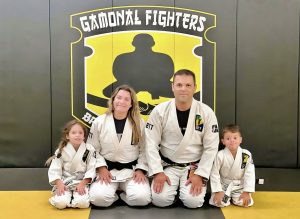
My husband, Diego Gamonal, has been part of this entire journey called Jiu-Jitsu. We share the mats, our family, and the challenges of building academies and developing students. He knows firsthand both the triumphant moments and the grueling realities of this path. My dear, beloved friend Fabiana Borges also holds a deeply special place in my story. She was one of the people who represented Jiu-Jitsu to me in a profoundly human way. Ours is a friendship that has spanned years, cities, and different chapters of life, and I carry it with immense affection. Master Murilo Bustamante is another vital reference. In August 2026, I had the honor of receiving my first black belt degree from his hands in Rio de Janeiro—a moment I will cherish forever. Each of these individuals shaped my trajectory in their own distinct way. If there is one core lesson I strive to carry forward, it is to never stop learning and to always value the human beings, not merely the titles they have won.
How did the idea for The Champions Code podcast come about, and what is the main mission or message you aim to share through it?
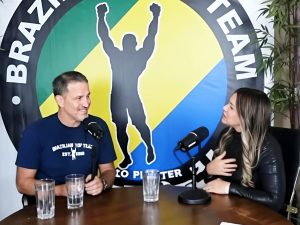
It all started organically, almost as a playful idea. Over the years, I met extraordinary people and began wondering how many priceless stories might never be documented. That’s how The Champions Code was born. Today, the podcast is a passion project I pursue with immense joy. I love meeting people, listening to their lived experiences, and asking questions that go beyond what the public already knows about them. I have my own studio and work with a team of editors to give the show the care and polish it deserves—though I’m still learning and don’t market myself as a professional podcaster. My goal isn’t just to talk about medals or podium finishes. I want to uncover who exists behind the accolades: the doubts, the losses, the turning points, and the choices that define a life. I had the honor of launching the show with Master Murilo Bustamante. Trophies record a victory; stories allow us to know the human being who lived it. That is what I want to preserve.
You’ve already sat down with major names and brilliant minds on the show. Is there a shared behavioral code or pattern you’ve noticed among all the champions you interview?
The project is still in its early stages, so it would be premature to claim I’ve cracked a universal code shared by all champions. And to be honest, I’m not looking for a cookie-cutter formula for success. What fascinates me most is seeing how people from vastly different walks of life navigate emotions we all know intimately: fear, insecurity, loss, pressure, and starting over. From the outside, we typically only see the end result. Through conversation, I begin to understand the person. Perhaps the most compelling takeaway isn’t finding an identical blueprint among champions, but rather discovering what makes each individual’s path uniquely their own.
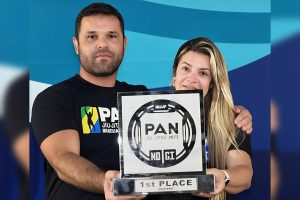
What is the biggest challenge in balancing your training routine, teaching classes, and producing a high-level podcast?
The biggest challenge is time—and knowing what deserves my attention first. I’m a mother to Bella and George. At just eight years old, Bella co-wrote her own book, Bella & George: The Jiu-Jitsu Journey, alongside her brother; watching the two of them grow up close is one of my greatest joys. My primary commitment is my veterinary health and care company, including Runner’s Relief Therapy. I’m also actively involved in our academies, training and teaching Jiu-Jitsu. The podcast entered this equation as a hobby I love, not as a new career. Having my own studio, an assistant, and production editors helps tremendously, as every episode demands thorough preparation and focus. For now, I’ve chosen to release one episode a month. I want to deliver something crafted with excellence without letting the project encroach on my family or my business responsibilities.
The women’s Jiu-Jitsu scene has grown exponentially in recent years. How do you assess the evolution of space, respect, and opportunities for women both on and off the mats today?
It is inspiring to see so many women and young girls discovering Jiu-Jitsu. When I started, female representation was far smaller. Today, we see athletes, instructors, and women leading projects and academies, both inside and outside the competition arena. This growth matters, yet there is still room to push forward. To me, respect isn’t about granting favors; it’s about recognizing competence, dedication, and hard work, paired with real opportunities to stay in the sport, teach, and lead. As the mother of a young girl who also trains, I think deeply about the environment we are building for the next generation. I want my daughter to be judged by her character, her work ethic, and the knowledge she acquires—never limited by the fact that she is a girl. The true advancement of women’s Jiu-Jitsu must also be reflected in the opportunities women find long after they step off the podium.

What is your main piece of advice for someone just starting out in the gentle art who comes from a humble financial background and faces severe hardship?
I am always careful when offering advice to someone facing severe deprivation, because I know that reality firsthand. When you don’t have enough money for basic necessities, clichés like “just believe” can feel completely detached from real life. If I could speak to the 15-year-old girl I once was, I would tell her never to confuse the circumstances she was born into with her own self-worth. Poverty can restrict your choices and opportunities, but it does not define who you are. Jiu-Jitsu can open doors, forge lifelong friendships, and provide vital role models. And as instructors, we must truly see everyone who walks through the door, not just the ones showing immediate talent. Sometimes, the quiet kid wearing the simplest gi is enduring struggles no one could ever imagine. Perhaps, before they need someone to teach them how to become a champion, they simply need someone who sees them.