
The road to a Jiu-Jitsu black belt is usually paved with exhaustive repetition and an encyclopedic accumulation of techniques,” says GMI Professor Fabrício Lopes. “However, in a sport that demands as much from the mind as the body, my classes focus on decoding the hidden logic behind every lever and transition.”
Forged in the heart of the Gracie Barra Headquarters, the black belt emphasizes conceptual understanding as the core of his methodology. “Instead of creating students who mechanically copy movements, I focus on developing strategic reasoning, exact timing, and the ability to anticipate the opponent’s reactions.”
For Lopes, collecting hundreds of techniques without understanding their underlying logic creates a false sense of progress. “I want my students to develop the dynamic ability to adapt and solve complex problems in fractions of a second.”
Understanding that students absorb information differently, Fabrício designed a flexible pedagogy that caters to everyone – from high-level competitors looking for tactical pressure to 45-year-old recreational practitioners training to relieve stress after work.
In this exclusive interview, the professor shares valuable lessons on class structure, the future of teaching, and the ultimate secret of a true master: focusing less on impressing and more on evolving the student.
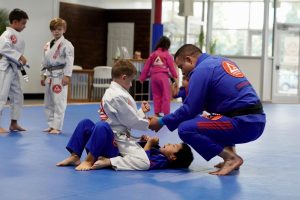
GRACIEMAG: You developed a teaching methodology called the “Predictive Adaptation Coaching System.” What are its main features?
FABRÍCIO LOPES: The core idea is teaching students to understand Jiu-Jitsu conceptually rather than just memorizing techniques. I focus heavily on positional awareness, anticipating reactions, leverage, timing, and adaptability. While traditional teaching relies on isolated movements and repetition, my system connects the positions. This helps students understand why a movement works and how to adapt it dynamically in live combat. Additionally, the system is highly adaptable. It is designed not just for competitors, but also for recreational practitioners, beginners, older students, and those with physical limitations. The goal is to build students who can think and solve problems under pressure, instead of relying solely on athleticism or memorized sequences.
What are the most common flaws you see in Jiu-Jitsu instruction worldwide?
The biggest issue is an excessive focus on accumulating techniques without conceptual understanding. Many students learn hundreds of moves but lack a deep grasp of positioning, timing, reactions, and decision-making. Another mistake is using a one-size-fits-all approach. A world-class competitor does not learn the same way as a 45-year-old recreational practitioner who trains after office hours. I also believe many schools over-rely on repetition without teaching the logic behind the movements. Repetition matters, but understanding drives adaptability. Good instruction should empower students to become independent thinkers, not just copycats.
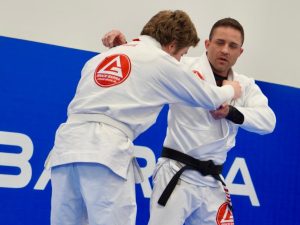
Does your teaching method work for any type of student? Are classes divided by student profiles?
Yes. Students learn differently based on their goals, age, experience, and physical condition. While the methodology’s foundation remains the same, the delivery changes. Competitors focus on reaction systems, tactical pressure, and strategic adaptation. Beginners need simplified conceptual frameworks and solid positional basics. Older or injured practitioners require maximum efficiency and energy conservation. A great coach must convey the same core principles in different ways depending on who is on the mat. My classes are structured progressively so that all students develop their understanding and face the right level of challenge.
Several instructors and gym owners already use your methodology. Who are they, and what has the feedback been like?
Over time, instructors and academy owners across Brazil, Canada, and the United States have integrated elements of my methodology into their schools. This includes independent coaches and instructors from various organizations who trained, competed, or studied under me. They now use concept-based teaching, positional systems, and progressive class structures. The feedback has been outstanding, particularly regarding student retention, faster understanding, better adaptability during sparring, and long-term technical growth. Instructors report that their students understand positions more deeply and apply techniques with much more confidence under pressure. Seeing these concepts scale through other coaches is the most rewarding part of my work.
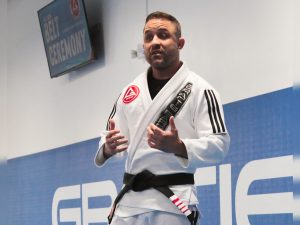
You spent years immersed in the Gracie Barra ecosystem. What was the greatest lesson or principle from GB that shaped your methodology?
The greatest lesson I learned at Gracie Barra was the importance of structure, consistency, and long-term development. Training at the GB Headquarters exposed me to a highly professional environment where the curriculum, discipline, technical standards, and instructor development were taken seriously. It taught me that excellent coaching isn’t just about technical knowledge—it requires organization, clear communication, and creating systems that students can consistently follow for years. The Gracie Barra Instructor Certification Program also deeply influenced me by emphasizing structured teaching, safety, and progression.
Many BJJ traditionalists fear that radical changes in teaching might dilute the martial art’s essence. How does your system protect that essence?
I understand that concern and agree that preserving the essence of Brazilian Jiu-Jitsu is vital. My methodology does not replace traditional fundamentals; it enhances how they are communicated to modern students. The core values – discipline, technical efficiency, leverage, patience, composure, and problem-solving – remain untouched. The lineage, respect for the art, and technical principles are still the foundation of everything I teach. The only change is the communication structure and learning progression. Teaching evolution does not weaken tradition when the fundamentals remain intact. In many ways, improving understanding actually helps preserve the art more effectively for future generations.
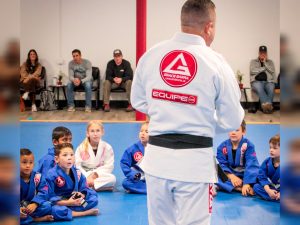
If you could give just one golden piece of advice to a new instructor starting their very first classes today, what would it be?
Focus less on showing how much you know and more on helping students understand what they need. Many beginner instructors try to impress students with complex techniques, but great teaching is actually about communication, structure, patience, and clarity. Students won’t remember every single technique you teach them. What they will remember is whether you helped them evolve, gain confidence, and understand the art on a deeper level. A good instructor teaches techniques. A great instructor teaches understanding.