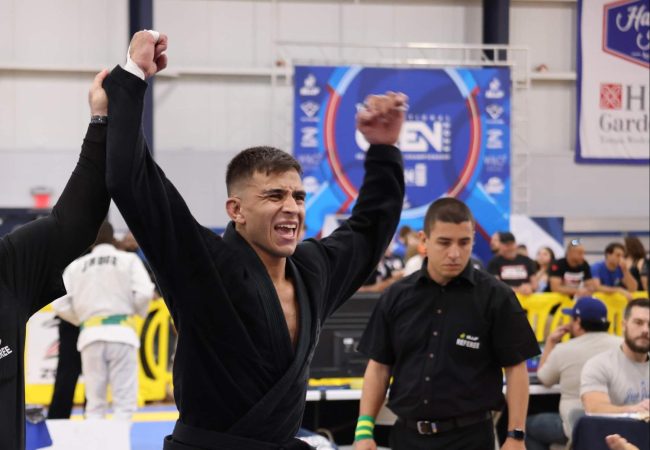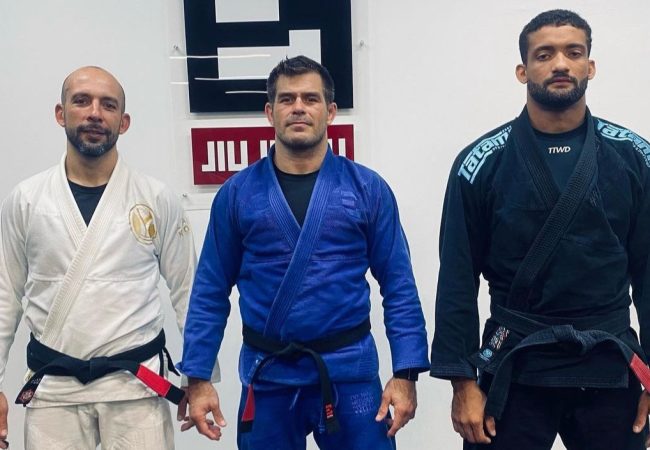

“Jiu-Jitsu transforms and connects, and I feel blessed to be that link between the gentle art and the community,” says coral belt Denys Darzi, our GMI at Denys Darzi BJJ in Boca Raton, Florida, USA. “For those dreaming of being a relevant teacher, more important than technical or pedagogical mastery, my advice is clear: teach with your heart. Study. Listen. Respect. Individualize. And, above all, be humble. The mat is not a stage for vanity; it is an altar of learning.” Specializing in BJJ classes for neurodivergent children, Darzi spoke with the GRACIEMAG team and shared inspiring tips. “Don’t stop, don’t back down, don’t give up. Even when everything tells you to stop, even when your body complains, put on your gi and train one more day. The journey is fantastic and worth it.” Check out the full interview below. Oss!
What benefits does a Jiu-Jitsu teacher provide to the community they serve?
DENYS DARZI: Teaching Jiu-Jitsu goes far beyond takedowns, submissions, or self-defense. It’s about forming individuals, preparing them to face life with confidence and determination. It’s about building bridges and offering a path based on discipline and self-awareness. When we do this work well, we help children, teenagers, and adults face challenges more effectively and live more fully. Here in South Florida, where there is so much cultural and social diversity, my goal is to create a safe and welcoming environment where students learn effective techniques and develop values such as discipline, respect, self-control, self-confidence, and focus. Adults regain their health and self-esteem, forge friendships, and everyone learns the value of overcoming obstacles. Jiu-Jitsu transforms and connects, and I feel blessed to be that link between the gentle art and the community.
One of the highlights of your academy is the exceptional work with neurodivergent children. How did you specialize in this area?
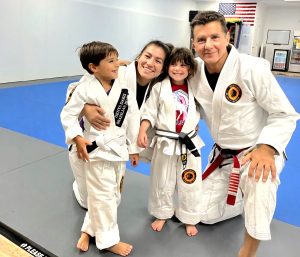
This work was born from observation and listening. I noticed that some children did not adapt to traditional class models. I began to observe more closely, study, and connect with health professionals (psychologist, speech therapists) to better understand this universe. I adapted my method, respecting each individual’s pace, time, and limits. The results are impressive: Jiu-Jitsu contributes to focus, motor coordination, communication, socialization, and especially self-esteem. Many of these children find in the dojo a place where they are accepted and valued. We strive to understand their needs and adjust our approach to meet each one uniquely.
Another highlight of your school is the self-defense course. What do you attribute to its success?
I can’t imagine BJJ without self-defense. This is the essence of our art. Many academies and instructors focus solely on competition, which is something completely different. Self-defense needs to be realistic, simple, and applicable. Most people don’t want to become fighters; they just want to feel safe, and that’s what we provide here at the academy. My course is adapted for all ages: children, women, adults, and seniors. The focus is always on prevention, empowering each student with techniques suited to their reality. More importantly, we aim to awaken the right “brain response” in a risky situation. We teach that the best fight is the one we can avoid, but if it’s inevitable, we must be ready to act safely. The success of this work comes from respect, care for each student, and the commitment I put my gi on every day.
Regarding competitive Jiu-Jitsu, what is the secret to transforming a mediocre athlete into a great champion?
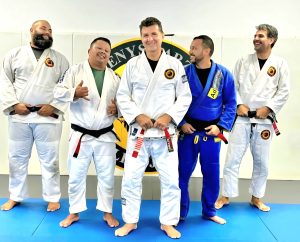
With many years of experience, I can say that three pillars are essential: consistency, discipline, and mindset. Many people focus on talent, but the true differentiation lies in the mind. A mediocre athlete becomes a champion when they learn to lose, to get back up, and to move forward. I work on the emotional side with the same commitment I dedicate to technique. I help my students understand that the biggest fight is against their own fears, laziness, and discouragement. When they win this internal battle, the result on the podium is just a consequence.
How do you define yourself as a Jiu-Jitsu teacher? What is the philosophy behind your school?
I am, above all, an educator. I use Jiu-Jitsu as a tool for transformation. The philosophy of my school is based on acceptance, respect, inclusion, and purpose. Here, everyone is welcome, from competitors to students with special needs, from beginners to seniors, men and women.
When someone hesitates to train Jiu-Jitsu, what do you usually say to encourage them to put on the gi and start their journey in the gentle art?
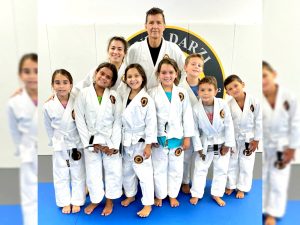
Martial arts academies can seem intimidating to many people. Taking the first step, crossing the threshold, is not easy. That’s why I always tell new students: “You don’t need to be ready. You just need to start.” Here, no one starts fighting. Students typically have about two months of adaptation, with almost individual attention even in group classes. During this period, they learn the basic fundamentals, gain confidence, and feel prepared to continue. No one starts knowing how to do flying armlocks. Jiu-Jitsu doesn’t demand perfection; it builds. On the mat, everyone starts from zero. Put on the gi and allow yourself. Transformation happens step by step.
Who is your greatest idol in your career, that person who serves as a guide in your most important decisions?
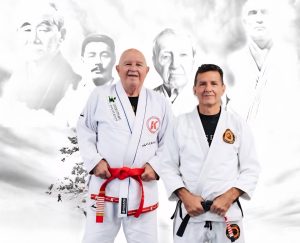
I have deep admiration for Carlos and Hélio Gracie, for the legacy they left and the opportunities they created for many Brazilians worldwide. They had the courage to break patterns and never gave up. I also have great respect and admiration for my Master, Francisco Mansor, for all the teachings I received and for the incredible family he built on the mats, a space where I have lifelong friends. But above all, my greatest guide is the awareness that my children and my students are watching me. My decisions need to honor this responsibility. I don’t make decisions thinking only of myself but of the example I leave.
What are your goals for the future?
I want to expand my work with neurodivergent children, open more classes for seniors, and perhaps write a book. A book that shows how to step out of the comfort zone, how to turn falls and defeats into learning, and how, with a good master and faith in God, it is possible to overcome one’s own limits. My biggest dream is that my children, grandchildren, and students carry forward the values I’ve imparted in every class. Legacy is that: making a difference even when we are no longer here.