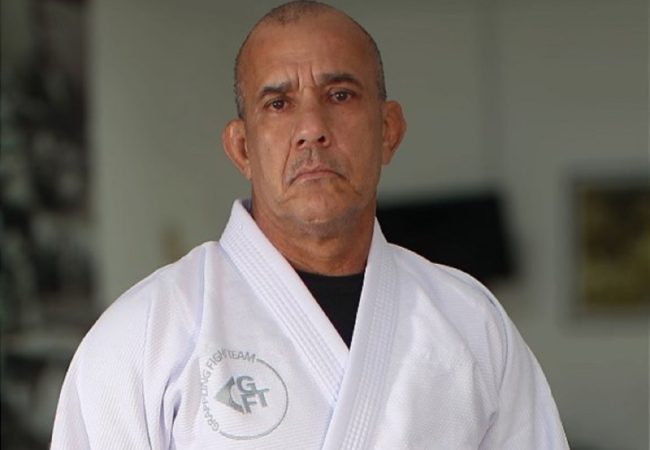

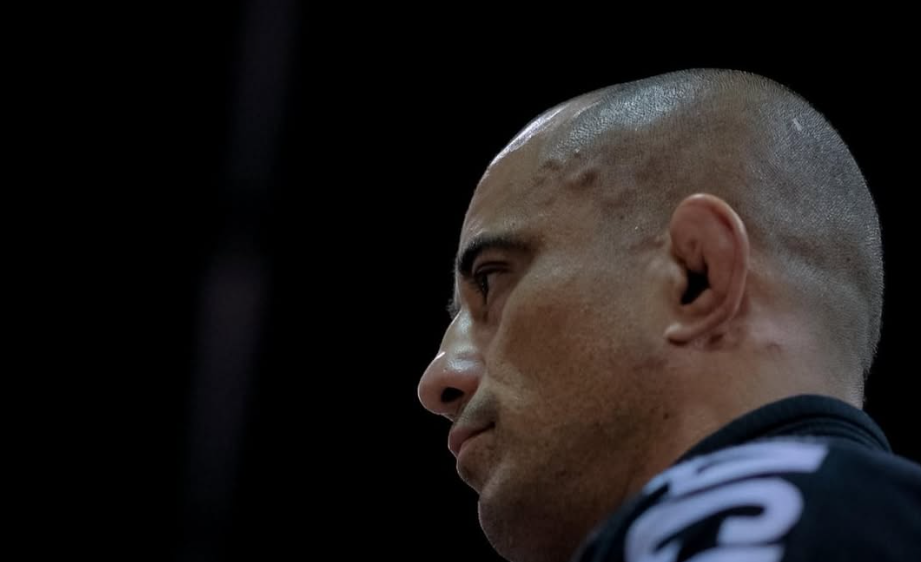
Rodrigo Fujita is a medal hunter in Jiu-Jitsu. Photo: Courtesy
Competing as a black belt in some of the biggest international Jiu-Jitsu tournaments requires more than reaching a high level. Staying there for years is another challenge. Consistency has become one of the main characteristics of Rodrigo Alexandre Fujita’s career as an athlete.
Fujita started his Jiu-Jitsu journey in Japan in 2008. Since then, he has competed in three countries and across different generations of the sport, eventually reaching major International Brazilian Jiu-Jitsu Federation (IBJJF) competitions.
Today, as a black belt, Fujita’s main achievements include three consecutive podium finishes at the IBJJF World Master, from 2023 to 2025, as well as a strong result at the Pan No-Gi and dozens of medals throughout his competitive career.
His World Master run stands out because of its consistency. Every year, the tournament brings together experienced black belts from around the world, making each podium finish the result of competing against athletes with years of experience.
For Fujita, however, reaching this level was the result of a journey that started almost two decades ago.
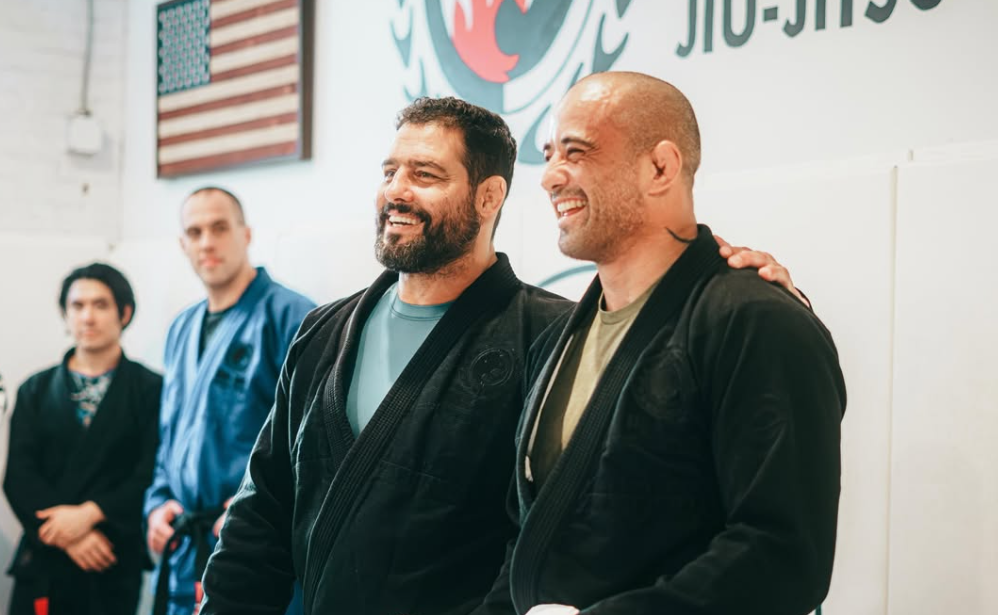
Rodrigo Fujita alongside Daniel Gracie. Photo: Personal Archive.
The Beginning in Japan
Of Japanese descent, Fujita moved to Japan with his family in search of better opportunities. While living in Gunma Prefecture, he discovered Jiu-Jitsu in 2008 after a friend who had recently started training challenged him.
His friend told Fujita he could control and submit him whenever he wanted. And he did.
“It was like he had a superpower. That made me want to learn,” Fujita remembers.
His early years as a competitor did not suggest what would come later. Fujita says he spent around three and a half years as a white belt and competed regularly for nearly two years before winning his first gold medal.
“I was really bad, but I was consistent. I never gave up,” he says.
That persistence eventually started producing results. As a blue belt, Fujita began making his name on the Japanese competition circuit, winning titles including the All Japan and Rickson Cup.
Those victories came shortly before his return to Brazil.
“Both titles were important because they showed me that I had the level to compete and keep improving. They gave me more confidence because, soon after the Rickson Cup, I was going back to Brazil, and I expected the level there to be higher.”
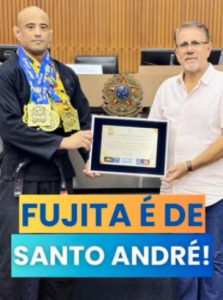
Rodrigo Fujita was honored by the City of Santo André, São Paulo.
From the São Paulo Circuit to the International Stage
Back in Brazil, Fujita continued his competitive career. In São Paulo, he competed in several events and earned results including the 2023 Circuito Paulista title and second place at the Federação Paulista GP Master.
But it was in the United States that the black belt achieved some of the most important results of his career.
In 2023, Fujita reached the podium at the IBJJF World Master, competing at black belt.
It was not an isolated result.
He returned to the podium in 2024 and did it again in 2025, completing three consecutive years among the medalists at the tournament.
During this period, Fujita also competed in other important events on the IBJJF calendar, including the Pan Championship and Pan No-Gi Championship.
Of all his medals, Fujita considers his first World Master podium one of the biggest turning points of his career.
“I believe my first World Master medal was the most important for my career. It opened doors, took me to places I never imagined I would be, and gave me a different feeling: it was all worth it.”
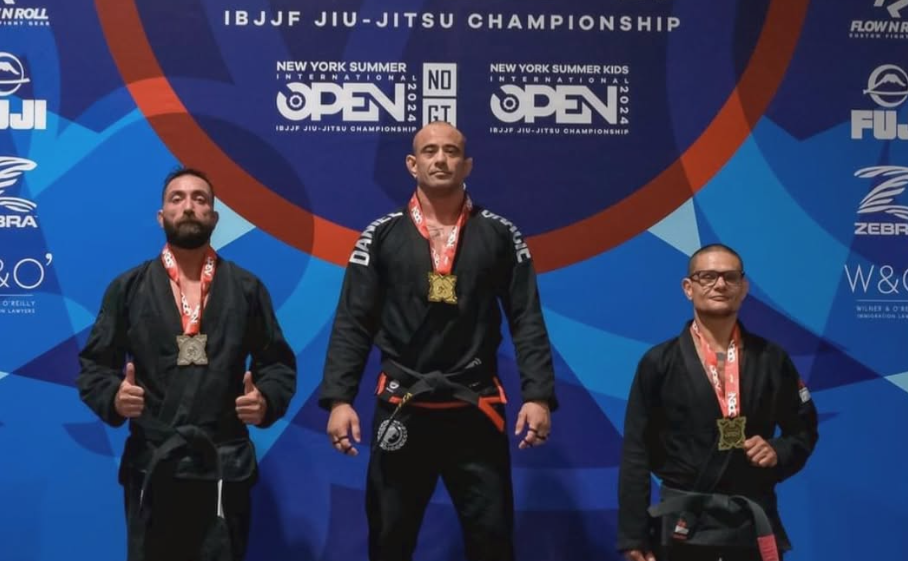
Rodrigo Fujita celebrates another gold medal in his competitive Jiu-Jitsu career. Photo: Personal Archive.
Competing After 40
Another important part of Fujita’s story as a competitor is that some of his biggest international results did not come early in his career.
Even after turning 40, the black belt continues to compete and test himself in international tournaments.
“I have always been consistent, and I never gave up on becoming a world champion one day. My time didn’t come when I was younger,” he says.
For Fujita, continuing to compete is also a way to show the athletes around him that every career has its own timeline.
“I didn’t achieve it when I was younger, but I’m still trying after 40. I want to show my teammates and students that it is possible to build your own journey.”
Fujita’s competitive career has also received recognition in Santo André, São Paulo. The athlete has been publicly honored for his achievements in the sport, taking the recognition for his competitive results beyond the mats.
A Career Built on Consistency
From a young athlete who needed nearly two years to win his first gold medal to a black belt who reached the World Master podium three years in a row, one characteristic has followed Rodrigo Fujita since his days in Japan: he keeps competing.
Nearly two decades after putting on a gi for the first time, Fujita continues to test himself at international IBJJF tournaments while chasing the major achievement still missing from his career.
A world title.
“The most important applause already comes from the people we love. Now we just have to believe and keep moving forward,” Fujita says.